From stabilization to reopening
Commercial Water Damage Planning and Recovery Guide
Commercial property recovery after water damage: phases, drying verification, documentation, choosing providers and prevention.
Recovery Is a Project, Not a Single Task
After the emergency response stabilizes a building, the property enters a recovery period that can range from a few days to many months. It is tempting to think of recovery as simply drying the building and replacing what was damaged, but the work involves many decisions, several parties and a sequence of tasks that depend on each other. Treating recovery as a managed project, with a clear scope, schedule, budget, documentation and communication plan, produces better results than reacting to each problem as it arises.
A commercial recovery project normally involves owners or managers, tenants or operators, restoration contractors, general contractors and specialty trades, insurers and adjusters, and sometimes engineers, industrial hygienists, consultants and public authorities. Each party has different priorities. Owners want to protect the asset and restore value, operators want to reopen quickly, insurers want to verify cause and scope, and contractors want clear direction and payment. A good plan aligns these interests by defining who decides what, and how information flows.
This guide explains the phases of recovery, how drying and verification work, how to document a loss, what to consider in insurance and contract discussions, how to evaluate restoration providers, and how to reduce the likelihood of a repeat loss. It builds on the emergency response guide and the assessment guide, and it is general information that does not replace professional, insurance or legal advice specific to your situation.
The Phases of Commercial Water Damage Recovery
Although each project is different, most follow a similar sequence.
- Emergency response and stabilization. The source is stopped, hazards are controlled, standing water is removed and immediate protective measures are taken.
- Assessment and scoping. The affected areas are inspected, water is classified, moisture is measured and mapped, and the plan is developed.
- Demolition and removal of unsalvageable materials. Materials that cannot be dried effectively or are contaminated are removed, often under containment.
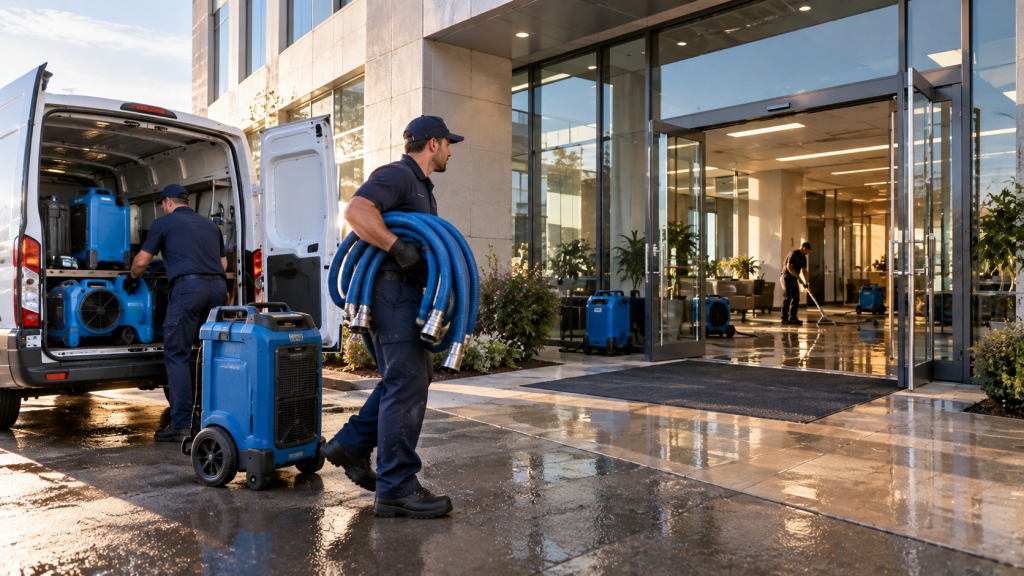
- Structural drying. Air movement, dehumidification and other methods are used to bring materials to acceptable moisture levels, monitored with regular readings.
- Cleaning and treatment. Surfaces, contents and building systems are cleaned and, where appropriate, treated or disinfected according to the category of water involved.
- Drying verification. Readings confirm that materials have reached dry standards before equipment is removed and finishes are installed.
- Repairs and reconstruction. Drywall, insulation, ceilings, flooring, paint, millwork and equipment are repaired or replaced, and permits and inspections are handled as needed.
- Closeout. Final inspection, punch list, documentation package, and any required approvals are completed before full reoccupancy.
Phases can overlap, and in occupied buildings they are often staged by area. It is also common to discover additional damage as demolition proceeds, which requires updates to scope and cost. Building this possibility into expectations, and agreeing in advance how changes will be approved, avoids friction later.
Drying, Monitoring and Verification
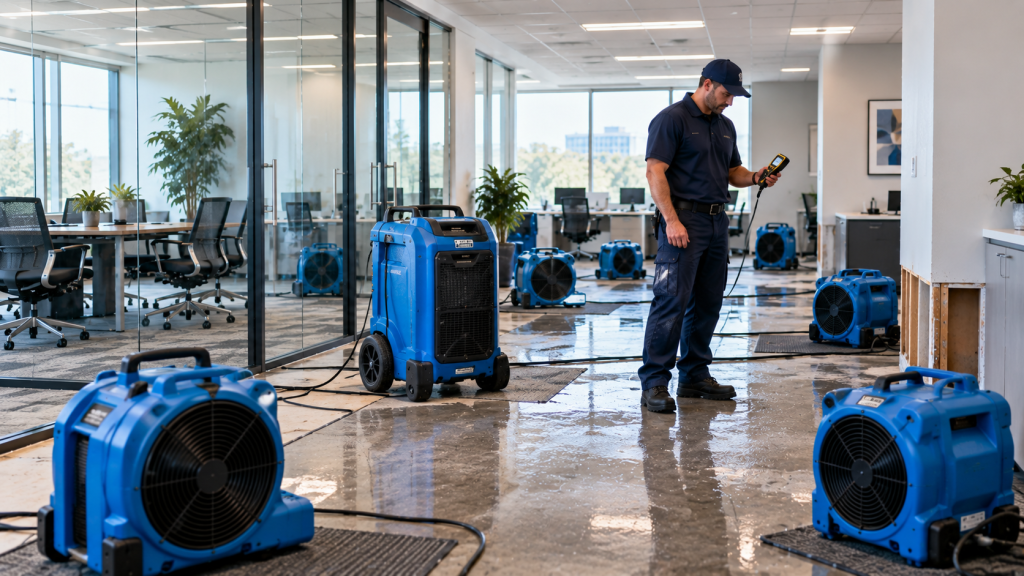
Drying is the technical core of recovery. Professionals apply the principles of psychrometrics, the relationship between temperature, humidity and moisture in air and materials, to control the environment so that water evaporates from wet materials and is removed from the space. Air movers increase evaporation at the surface, dehumidifiers remove moisture from the air, and in some situations heat, specialty drying systems or injection methods are used for cavities and materials that are hard to dry. Equipment placement is based on the size of the space, the materials and the readings.
Monitoring is what separates a controlled process from guesswork. Readings taken at the start establish the condition of materials, and repeated readings show how quickly they are drying. Drying goals are set with reference to unaffected materials in the same building, and progress is documented in logs. If readings stall, equipment may need to be relocated or the plan adjusted. Ending drying before materials reach their goal risks leaving moisture behind, which can lead to odors, staining, floor and finish failures and microbial growth. Continuing beyond the goal adds cost without benefit. Verification with documented measurements is therefore valuable to both the owner and the insurer.
Some materials are difficult or impractical to dry. Saturated insulation, ceiling tile, porous wall coverings and certain flooring assemblies are often replaced rather than dried, particularly where water was contaminated. Concrete and masonry can hold moisture for a long time, so moisture testing before installing flooring is an important step. The decision between drying in place and removal usually balances feasibility, risk, timing and cost, and it is best made with clear information from the restoration provider.
Do not skip verification. Installing new finishes over materials that are still wet can trap moisture and cause failures months later. Ask for written moisture readings that show materials met their dry goals before repairs begin.
Managing an Occupied Building During Recovery
Most commercial recovery projects occur in buildings that are in use, and this fundamentally shapes the plan. Work zones need to be separated from occupied areas with containment barriers, and airflow may be managed with air scrubbers or negative air to prevent dust and odors from spreading. Noise from equipment and demolition can disrupt neighbors, so schedules may shift work to nights or weekends. Access routes, elevators, loading areas, restrooms and parking may need to be adjusted or protected.
Communication is the tool that makes occupied recovery workable. Tenants, staff and customers need timely, accurate updates on what is happening, what to expect, where to go and when spaces will be available again. Property managers commonly set up a single channel for updates and a single contact for questions. Written notices, floor plans marking work zones, and regular progress summaries reduce confusion and help preserve tenant relationships. In regulated environments, such as health care and food service, the plan must also meet the requirements of the relevant authorities.

Business Interruption and Financial Planning
The direct cost of restoration is often only part of the financial impact. Business interruption, including lost revenue, continuing expenses, relocation costs, temporary rent abatement to tenants, and reputational impacts, can exceed repair costs, particularly for operators who cannot serve customers while areas are closed. Extra expenses, such as temporary equipment, alternative space, expedited shipping, or overtime, add up quickly.
A basic financial plan tracks direct restoration costs, repair and reconstruction, contents and equipment, business interruption and extra expenses, and any costs that fall to tenants or others under the lease. Keep records of the costs and of the reasons for them. Whether specific costs are covered depends on your policy, its limits and waiting periods, and the cause of loss, and property owners should review these details with their insurance professional. For leased property, both landlord and tenant policies and lease provisions can matter, including who insures improvements, how rent is handled during closure, and who controls repair decisions.
Where a loss is large or complex, some owners engage outside advisors such as public adjusters, forensic accountants, attorneys or independent consultants. Whether that makes sense depends on the size of the loss and the circumstances, and local rules differ regarding licensing and fees.
Documentation, Communication and Insurance
Consistent records support every part of recovery. Maintain a project file that includes photographs and video, moisture readings and drying logs, scopes of work and estimates, invoices and receipts, correspondence with insurers, tenants and vendors, permits and inspection records, and a timeline of key events. A single person should be responsible for keeping the file organized, and it should be stored securely with backups outside the building.
When working with insurers, adjusters and other parties, clarity and timeliness help. Provide requested information promptly, keep written records of conversations and agreements, and ask questions about anything that is unclear, including how scope, pricing and cause of loss will be evaluated. Do not assume that a restoration provider’s estimate will be accepted automatically, and do not assume an insurer’s initial evaluation is final. Differences in scope or pricing can usually be resolved by comparing documentation and discussing specific line items. If a dispute arises, your policy will describe available processes, and legal counsel can advise on your rights and options.
Contracts also deserve attention. Review authorizations, work orders and contracts before signing, and confirm what they cover, how pricing is determined, whether work is priced by time and materials or by unit, how changes are approved, who holds responsibility for permits and subcontractors, and what warranties apply. Direction-of-payment or assignment provisions, if present, deserve careful reading and, if necessary, legal review.
Choosing a Restoration Provider
Selecting a restoration provider is one of the most consequential decisions in the recovery process. Speed matters, but so do qualifications, capacity and transparency. Look for a provider with commercial experience relevant to your property type, and ask about the following.
- Training and certifications. Ask what training the crew leaders and technicians have, including credentials from recognized industry bodies such as the Institute of Inspection, Cleaning and Restoration Certification (IICRC), and whether the company follows the ANSI/IICRC S500 standard.
- Licensing and insurance. Confirm any licenses required in your state or locality and ask for proof of general liability, workers’ compensation and other relevant coverage.
- Capacity and response time. Ask how quickly they can begin, how many people and how much equipment they can deploy, and how they handle large or multi-site losses.
- Occupied-building experience. Ask how they manage containment, noise, safety, and communications when tenants or customers remain on site.
- Documentation practices. Ask what they will document, how often they report, and whether you will receive moisture logs, photographs and daily summaries.
- Pricing and scope clarity. Ask how the estimate is structured, what is included, what could change and how changes are approved.
- References and history. Request references from similar projects, and check online reviews and any complaints with appropriate consumer or licensing agencies.
Be cautious of providers who pressure you to sign immediately, provide vague scopes, refuse to share documentation, or promise outcomes that cannot be guaranteed. A good provider will explain their process, answer questions plainly and respect your insurer’s and your own requirements. If your loss involves specialized issues such as regulated materials, structural damage or mold, you may need other specialists in addition to the restoration provider.
Repairs, Reconstruction and Return to Service
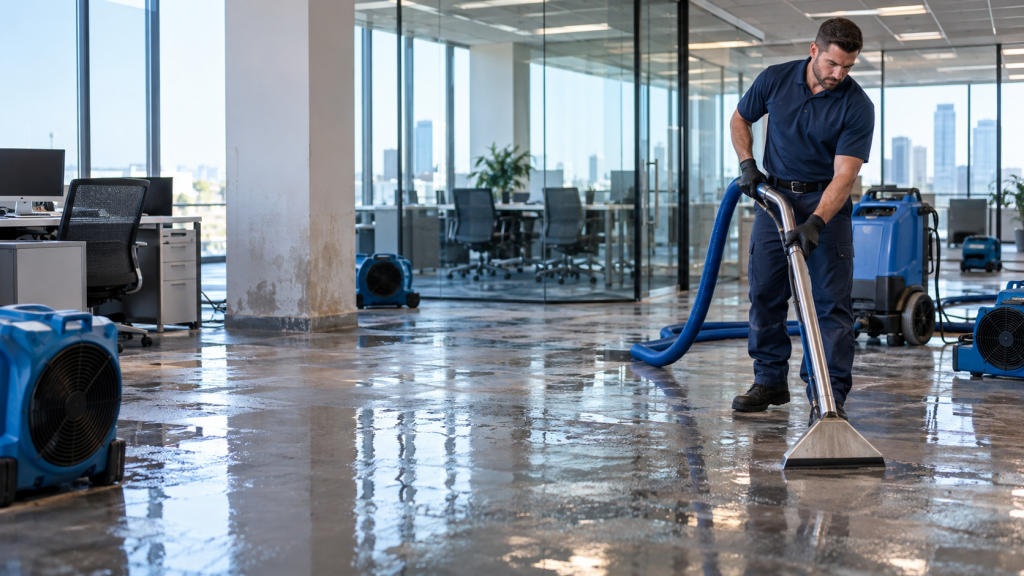
Once drying is verified and cleaning is complete, repair work restores the building’s finishes and systems. This can include replacing insulation, drywall, ceiling systems and flooring, painting, repairing millwork and casework, and reinstalling fixtures and equipment. Where structural, electrical, plumbing or fire protection systems are affected, licensed trades and inspections may be needed. Permits may be required for certain work, and inspectors may need to approve it before areas are put back in use.
Sequencing and coordination reduce delays. Long-lead items such as specialty flooring, storefront glass, custom millwork, mechanical equipment and electrical gear should be identified and ordered early. In multi-tenant buildings, tenant improvements and finish schedules may need to be coordinated with the landlord’s work. Where the building is used for regulated activities, final approvals from health, fire or building officials may be required before reopening.
Before final acceptance, do a walkthrough with the responsible parties. Confirm that the work matches the agreed scope, that finishes are complete, that systems function and that documentation has been delivered. Keep warranties, drying records and inspection reports with the project file. If odors, staining, floor movement or other signs of moisture appear after completion, report them promptly so they can be investigated while the record is fresh.
Preventing the Next Loss
Recovery is an opportunity to find and fix the underlying cause, and to reduce future risk. Start with the cause. If a supply line failed, evaluate the age and condition of the rest of the piping. If a roof leaked, examine the roof as a system, including drains, flashings and penetrations. If a condensate line overflowed, consider how often such lines are cleaned and whether overflow protection is present. A repair that addresses only the symptom often results in a repeat event.
Broader prevention measures include a scheduled inspection and maintenance program for roofs, drains, plumbing, sprinkler systems, HVAC condensate lines and water-using equipment. Water leak detection sensors, flow monitors and automatic shutoff valves can identify problems early in high-risk areas such as mechanical rooms, kitchens, server rooms, and above-ceiling spaces near critical equipment. Freeze protection, including insulation, heat tracing and temperature monitoring, helps in cold climates. Knowing where shutoffs are and ensuring they work, and training staff on procedures, reduces response time when something goes wrong.
Consider prevention as part of risk management and budgeting. Compare the cost of maintenance and monitoring with the cost of typical losses, review insurance coverage and deductibles regularly, and keep records of maintenance and inspections. Some insurers offer guidance or incentives for water risk mitigation, and some require certain protective measures as conditions of coverage, so confirm with your insurance professional.
A Recovery Planning Checklist
The following checklist can be adapted to your property.
- Designate a single project lead and a documentation owner.
- Notify your insurer and confirm requirements for notice, documentation and mitigation.
- Confirm the source is stopped and the cause is identified.
- Obtain a written scope, timeline and pricing structure from your restoration provider.
- Establish a communication plan for tenants, staff, customers and other stakeholders.
- Track business interruption and extra expenses from the start.
- Require drying logs and moisture readings, and confirm verification before repairs.
- Identify permits, inspections and regulatory approvals early.
- Order long-lead materials and equipment promptly.
- Complete a final walkthrough and collect all documentation.
- Address root causes and update maintenance, monitoring and response plans.
Continue: Emergency Response
The first 24 to 72 hours, step by step. Read the guide
Continue: Property Types
How recovery priorities differ by building use. Read the guide
Continue: Flood and Storm
Water categories and weather-driven losses. Read the guide
Frequently Asked Questions
It varies widely. A small, clean-water loss may be dried in several days with repairs following soon after, while a large or contaminated loss, or one that involves long-lead materials and approvals, can take weeks or months. A written schedule from your restoration and reconstruction teams is the best guide for your property.
Drying is complete when moisture readings in affected materials reach the dry goals established for the project, typically by comparison with unaffected materials. Ask for written readings and drying logs, and do not rely on appearance or touch.
Some restoration companies also offer reconstruction, while others focus on mitigation and drying. Using one company can simplify coordination, and using separate contractors can provide more choice. In either case, ensure the scope, responsibilities and warranties are clear.
Generally, policyholders may choose their own contractors, but policies and local rules differ, and some insurers have preferred vendor programs. Review your policy and ask your insurance professional how provider selection and approval work.
Keep photographs and video, moisture readings, drying logs, scopes and estimates, invoices, receipts, correspondence, permits, inspection reports, lease communications and any records of business interruption and extra expenses.
Identify and fix the root cause, maintain roofs, drains, plumbing, sprinklers and HVAC condensate lines, consider leak detection and automatic shutoff devices in high-risk areas, know the location of shutoff valves, and keep an up-to-date response plan.
Ready to Organize Your Recovery?
Use the assistance page to gather the key facts about your property, your loss and your priorities, so you can move into recovery with a clear, documented starting point.