The first 24 to 72 hours
Emergency Commercial Water Damage Response
Emergency commercial water damage checklist: safety, stopping the source, documentation, who to call and what to avoid in the first hours.
Why the First Hours Matter
When water enters a commercial building, the situation changes quickly. Water that is still flowing keeps spreading, materials that are saturated begin to swell, stain and deteriorate, and areas that are damp for long enough become candidates for microbial growth and odors. Every hour also affects operations: tenants, staff and customers need direction, deliveries and appointments may be disrupted, and equipment and inventory may be at risk.
The purpose of an emergency response is not to complete the repair. It is to protect people, stop the source, prevent the loss from getting larger, and set up an orderly recovery. Decisions made in the first day often determine whether a loss stays contained to one area or spreads into adjacent tenant spaces, lower floors and building systems. Calm, sequenced action is more effective than rushed activity, and having a written plan in advance makes it far easier to follow.
This guide is written for property owners, managers, facility teams and business operators who need a framework for the first 24 to 72 hours. It is general information, not a substitute for local emergency services, your insurer, your building engineer or qualified restoration professionals, and it should be adapted to your property, your policies and your local rules.
If there is immediate danger, call 911. Fire, electrical hazards, structural concerns, gas odors, injuries or people trapped in flooded areas are emergencies for public safety responders first. Property protection comes second to human safety.
Step One: Protect People and Assess Hazards
The first priority is always people. Direct occupants away from affected areas, and close off any zone where the floor is wet, ceilings are sagging or water is near electrical equipment. Wet floors are a slip hazard, and saturated ceilings can fail and drop water, tile and insulation without warning. Keep customers, tenants and employees out of the affected area until it has been assessed as safe.
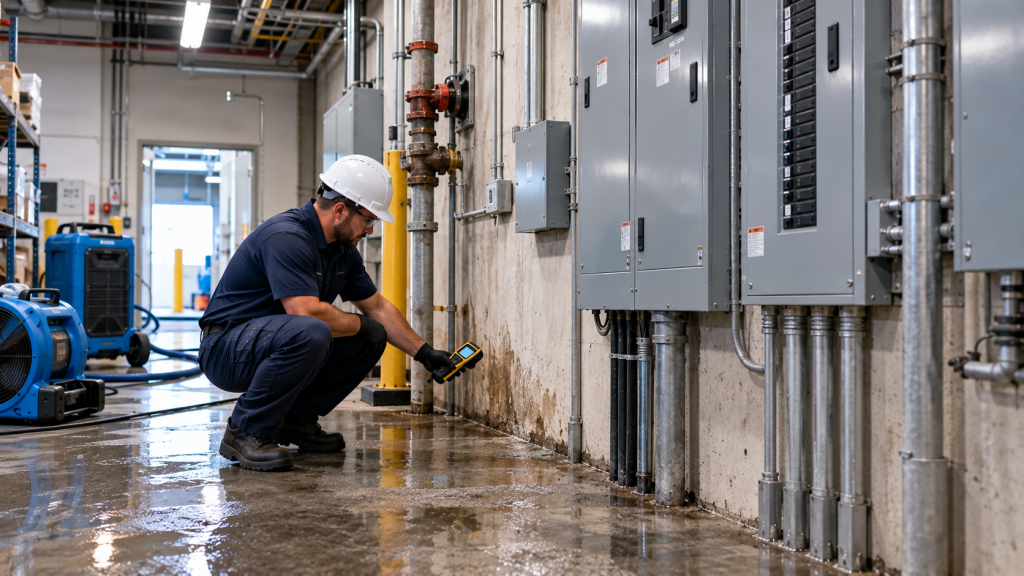
Electrical hazards deserve particular attention. Water and electricity together can create a risk of shock, and water can travel into outlets, panels, lighting, elevators and equipment in ways that are not obvious. If water is contacting or dripping near electrical equipment, do not touch it. If it is safe to do so and you know how, shutting off power to the affected area at the breaker may reduce risk, but never enter standing water or handle panels in wet conditions. Have a qualified electrician or the utility confirm when it is safe to restore power.
Other hazards to consider include structural damage, contaminated water, mold or other biological concerns, and chemicals or hazardous materials stored in affected spaces. In health care, food service, laboratories and industrial settings, additional hazards may apply, and your internal emergency procedures should be followed.
Step Two: Stop or Control the Source
If it is safe, stopping the source is the single most effective action. For a plumbing failure, this means closing the nearest shutoff valve or the main water shutoff. Know in advance where these valves are: in many commercial buildings there are floor-level, riser-level and main valves, and they may be in mechanical rooms, above ceilings or in areas that need keys. For a sprinkler discharge, isolating the system usually involves a specific valve and may involve the fire department or a fire protection contractor, and rules about impairing a fire protection system may apply, so follow your building’s procedures and local requirements.
For a roof leak or storm intrusion, stopping the source may require temporary measures such as tarping, which should be done by trained professionals for safety reasons. For an HVAC condensate issue, shutting down the unit may stop the flow. For sewer or drain backups, stop using fixtures on the affected line and contact the appropriate plumber or municipal utility. If you cannot identify or safely reach the source, contact your building engineer, a plumber or a restoration provider immediately.
Recording the time when the source was discovered and the time it was stopped is valuable information for later. If a building is unattended, such as in a weekend or overnight loss, note the last time someone was in the space and how the water was discovered.
Step Three: Document Before You Move Anything
Before removing water or moving contents, document the conditions. Take photographs and video showing the source, the affected rooms, the ceilings, walls and floors, and any damaged equipment or inventory. Capture wide views and close-ups, and include identifying details such as serial numbers on equipment when practical. Record the date and time, who discovered the loss and what actions were taken.
Make a running log of everything that happens: calls made, people notified, instructions given to tenants, and vendors contacted. Keep receipts for emergency purchases and services. Save any damaged materials or items that an adjuster may need to see, or photograph them thoroughly if disposal is necessary for safety or sanitation reasons. If in doubt about whether an item can be discarded, ask your insurer or restoration provider before removing it.
Good documentation supports discussion with insurers, tenants, contractors and, when necessary, legal counsel. It also helps your restoration provider set an accurate scope, since they can see the conditions as they were on arrival. The assessment guide covers documentation in more detail.
Step Four: Contact the Right People
Emergency response is a coordination task. In most commercial situations, a sensible call sequence looks like this, adapted to your building and situation.
- Emergency services if there is immediate danger to people or property.
- Building engineer, facility manager or property manager so that shutoffs, access and internal procedures are started.
- Your insurance representative or broker to report the loss and understand any reporting requirements or duties after a loss. Policies often contain notice provisions and requirements to protect the property from further damage.
- A qualified restoration provider with commercial experience, appropriate certifications and the capacity to respond quickly and to work in occupied buildings.
- Specialty trades such as plumbers, electricians, roofers or fire protection contractors as needed to correct the cause or make repairs safe.
- Tenants, staff and other stakeholders who need clear information about access, timing and what to expect.
- Utilities or municipal authorities if the source is a public water or sewer line, or if the building needs inspection before reoccupancy.
When you contact a restoration provider, be ready to describe the type of property, the source and time of the loss, the approximate affected area, whether the water has been stopped, whether the building is occupied, and any hazards you know of. Ask about response time, whether they can begin immediately, and how they will document their work. For guidance on evaluating providers, see the recovery planning guide.
Step Five: Limit Further Damage
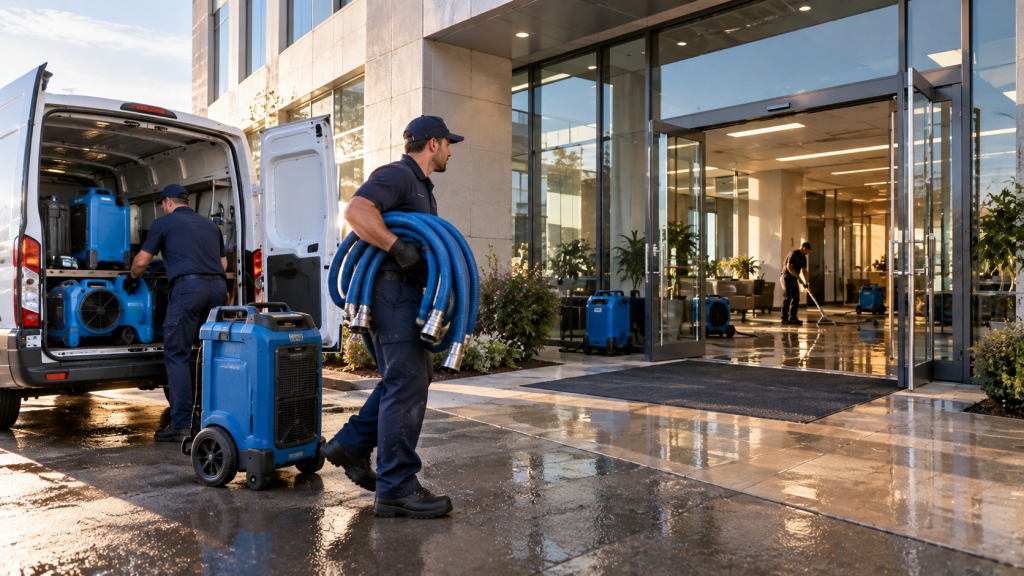
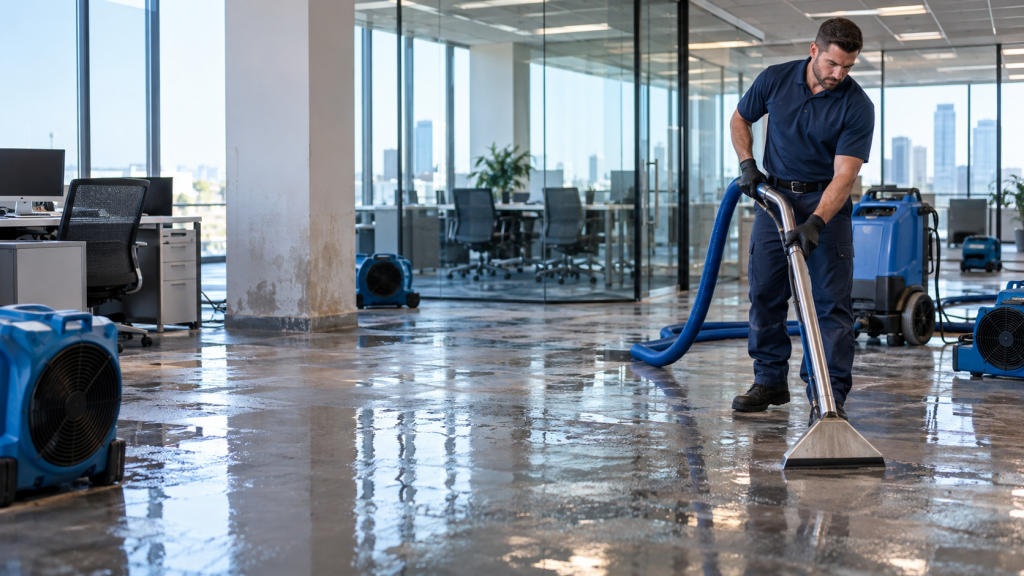
Once the situation is safe and documented, the aim is to prevent the loss from growing. Where it is safe and practical, remove standing water, since long contact with water increases damage. Commercial buildings often need extraction equipment, which is typically the province of trained crews. Protect contents by moving items to dry areas, elevating furniture and equipment off wet floors, and covering items that cannot be moved. Pay special attention to records, electronics, inventory, samples, medications, and other high-value or sensitive items, and follow any regulations that apply to them.
Ventilation and drying begin early but should be planned. Opening windows may help in some cases and hurt in others, for instance when outdoor humidity is high or when storm conditions persist. Professionals typically set up air movers and dehumidifiers based on measurements and the layout of the space and control airflow to avoid spreading contamination. Avoid using household fans, heaters or vacuums on wet areas unless a qualified person has said it is appropriate, since they can spread contamination or create electrical hazards.
Protecting the building envelope matters too. If the roof, windows or doors have been damaged, temporary protection can prevent additional intrusion. If the water may have come into contact with sewage or floodwater, treat the area as contaminated and keep people out until it has been assessed.
Occupied Buildings and Business Continuity
For most commercial properties, an important question is whether to close, partly close or remain open. That decision depends on safety, air quality, access, regulation and the type of business. Some situations, such as significant contamination, electrical hazards or structural risk, may make closure necessary. Others allow work to be contained so unaffected areas keep operating.
Businesses that cannot easily close, such as medical offices, restaurants, schools, hotels and retail stores, need early communication and contingency plans. This may include temporary relocation, alternate entrances, revised hours, redirection of deliveries, or use of nearby space. Regulated operations, including food service and health care, may need to consult local health or licensing authorities before reopening or before continuing operations near a loss. Property managers should communicate with tenants early and often, in writing, and keep records of what was said.
Business interruption and extra expense can accumulate quickly. Track lost sales, idle labor, additional costs, and any relocation or temporary equipment expenses. Whether these costs are covered depends on your policy and the cause of loss, so review your coverage with your insurance professional as early as possible.
What Not to Do
Avoid the following actions in the first hours of a water loss.
- Do not enter standing water, or touch electrical equipment, until the area has been confirmed safe.
- Do not assume water is clean. Water that has passed through ceilings, insulation, drains or floors can carry contaminants.
- Do not throw away damaged items or building materials before documenting them and, where appropriate, consulting your insurer.
- Do not delay notifying your insurer. Many policies include notice requirements and duties to protect property from further damage.
- Do not rely on surfaces that look dry. Moisture can remain hidden in walls, ceilings and under floors.
- Do not use household appliances or improvised methods on wet areas or contaminated water.
- Do not allow untrained personnel to remove suspect materials such as those that may contain asbestos or lead paint. Regulated materials require proper procedures under applicable law.
- Do not sign broad authorizations or contracts under pressure before you understand the scope, pricing and your insurer’s requirements.
The Next 24 to 72 Hours
Once the emergency is under control, the work turns to stabilization and drying. A restoration team typically inspects and measures the affected areas, establishes a plan, extracts water, removes materials that cannot be dried effectively or that are contaminated, and sets up drying equipment. Daily monitoring records moisture readings and shows whether the environment is heading toward dry standards. Adjustments to equipment placement, containment and scope are normal as the situation becomes clearer.
During this period, the owner or manager should keep communication flowing with tenants, staff, the insurer and vendors. Expect questions about timing, access and costs. Keep a single point of contact for decisions so that instructions are consistent. Continue to document changes in scope, additional discoveries and progress. If problems appear, such as new leaks, additional damp areas or unexpected odors, report them promptly.
Once drying goals are verified by measurement, the project moves into cleaning, treatment where necessary, and repairs. The recovery planning guide describes these phases, and the guide by property type explains how priorities differ for offices, retail, restaurants, hotels, warehouses, medical facilities and other properties.
Build a Response Plan Before You Need One
The best emergency response is one that has been rehearsed. Property owners and managers can reduce the impact of future losses by preparing in advance. Label and map main, riser and branch shutoff valves, and make sure that more than one person knows where they are and has access. Maintain an up-to-date contact list for the building engineer, plumbers, electricians, roofers, fire protection contractors, insurers and restoration providers. Keep copies of insurance policies, emergency procedures and building drawings somewhere accessible outside the building.
Consider written response procedures for common scenarios, such as pipe bursts, sprinkler discharge, roof leaks and sewer backups, and train staff to follow them. Review leases and tenant communication plans so that responsibilities are clear. Inspect and maintain roofs, drains, sprinkler systems, HVAC condensate lines and water-using equipment on a regular schedule, and consider water leak sensors and automatic shutoff devices in high-risk areas, particularly where equipment operates unattended or where sensitive contents are stored. These steps do not eliminate risk, but they shorten response time, and shorter response time generally means smaller losses.
Continue: Causes and Assessment
How losses start, how water hides and how assessment works. Read the guide
Continue: Flood and Storm
Storm intrusion, flooding and sewer events. Read the guide
Continue: Recovery Planning
The phases of recovery and how to evaluate providers. Read the guide
Frequently Asked Questions
Protect people first: keep occupants out of hazardous areas and call 911 if there is immediate danger. Then, if it is safe, stop the source of water, address electrical risks, document the conditions with photographs and notes, and contact your insurer and a qualified restoration provider.
If water is near electrical equipment and it is safe to reach the breaker without entering water, shutting off power to the affected area can reduce risk. Never touch electrical equipment while standing in water, and have a qualified electrician confirm when it is safe to restore power.
As soon as reasonably possible. Many policies have notice requirements and expect the policyholder to take reasonable steps to prevent further damage. Your policy language governs, so ask your insurance professional what applies to your situation.
Small, clean-water incidents may be manageable by trained maintenance staff, but commercial losses often involve larger areas, hidden moisture, contamination risk or electrical hazards. Consider involving a qualified restoration provider, especially if the water may be contaminated or has spread beyond a small area.
It depends on the volume of water, the materials, the building, the humidity and the equipment used. Many projects involve several days of active drying, followed by verification with moisture readings, though larger or more complicated losses can take longer.
Sometimes. It depends on safety, the extent of the damage, the water category and any regulations that apply to your type of business. Qualified professionals can often contain affected zones, but the decision should consider input from your restoration provider and, where relevant, health or building authorities.
Water Damage in Your Building Right Now?
Use the assistance page to summarize the source, the affected areas and the urgency, so you have the key facts ready for your insurer and restoration provider.