Weather-driven water losses
Commercial Flood and Storm Water Damage
Commercial flood damage and storm intrusion explained: water categories, sewer backups, insurance questions and how to prepare.
How Flood and Storm Losses Differ
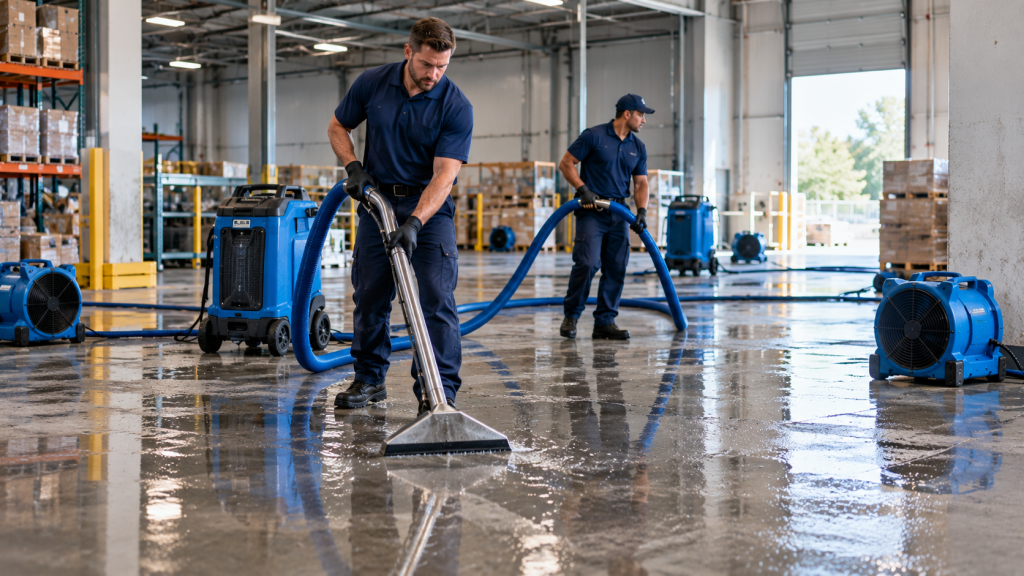
A burst pipe and a flooded building may both leave standing water on the floor, but the two events are very different problems. A plumbing failure usually begins with clean water from a known source, in a contained area, at a time when contractors and materials are readily available. A flood or storm loss often involves water that carries soil, debris, bacteria and chemicals, that enters from many places at once, and that arrives as part of a wider event that affects an entire neighborhood or region.
That difference has consequences for nearly every decision. Safety is more complicated because utilities may be disrupted, building systems may be damaged, and floodwater can conceal hazards. Contamination is more likely, which affects which materials can be cleaned and which are removed. Resources are stretched, because restoration companies, roofers, electricians and equipment suppliers may be working through a long list of urgent calls. Insurance treatment also differs, since flood, wind, rain, and sewer backup are commonly handled under different coverages, deductibles and conditions.
This guide explains the main types of weather and flood-related commercial water damage, the water categories used in the restoration industry, and the planning steps that help owners and managers respond faster. It is educational and general in nature, and it does not replace your policy documents, local authorities, or qualified professionals.
Types of Storm-Related Water Intrusion
Storms cause water damage in several distinct ways, and knowing how the water entered helps determine both the response and the likely coverage discussion.
Wind-driven rain and roof failures
High winds can lift or tear roof membranes, dislodge flashings, damage rooftop equipment, and drive rain through openings that would normally stay dry. Once water passes the roof surface, it enters insulation, decking and interior ceilings. Hail can bruise or puncture roofing and damage skylights, and falling limbs or debris can create openings. Even after the storm ends, the interior often remains wet, and additional rain before repairs increases the loss, which is why temporary roof protection is often an early priority.
Envelope and window intrusion
Storms can force water around windows, doors, storefronts, louvers, expansion joints and wall penetrations. Broken glass and damaged doors create direct openings. Wind-driven rain may enter through vents, rooftop units or mechanical penthouses. Water that enters through walls can run down cavities and appear far from the entry point, so it is important to assess wall assemblies and not just visible finishes.
Drainage and surface water
Heavy rain can overwhelm roof drains, gutters, scuppers, downspouts, storm drains and site grading. Ponded water on a roof can exceed design loads and leak, and water pooling around the base of a building can enter through doors, loading docks, foundation cracks and below-grade openings. Parking lot runoff may carry oil, fuel, salt and debris into buildings at ground level.
Rising water and flooding
Flooding occurs when water from rivers, coastal surge, overwhelmed drainage systems or heavy runoff rises around and into a building. This is different from rain entering through a leaking roof. Flood events typically produce water that is contaminated, and they often affect ground floors, basements, elevator pits, mechanical rooms and equipment located at low elevations.
Understanding Water Categories
The ANSI/IICRC S500 standard used widely in the restoration industry describes three categories of water based on the level of contamination at the source and along its path. These categories help professionals decide what protective equipment to use, which materials are candidates for cleaning and drying, and which should be removed.
Category 1
Water from a sanitary source that does not pose substantial risk from dermal, ingestion or inhalation exposure, such as a broken supply line. It can degrade to a higher category over time or through contact with building materials.
Category 2
Water containing significant contamination that could cause discomfort or illness if contacted or consumed, such as discharge from some appliances or equipment, or sump overflow with some contamination.
Category 3
Grossly contaminated water that may contain pathogens or toxins, including sewage, rising floodwater from rivers or streams and standing water that has supported microbial growth.
Categories are not permanent. Clean water can become more contaminated as it sits, mixes with soil or dirt, or passes through building materials. Floodwater and sewage are typically treated as Category 3. Rainwater that has entered through a roof is often considered at least Category 2 once it has passed through insulation, ceiling systems and building materials, though the classification depends on the specific circumstances and the judgment of a qualified professional. Because classification affects safety and scope, owners should expect a restoration provider to explain how they have classified the water and why.
Contaminated water calls for caution. Avoid contact with floodwater and sewage, keep occupants out of affected areas, and have trained professionals with appropriate protective equipment assess and clean the area. Porous materials that have been in contact with grossly contaminated water are commonly removed rather than dried in place, though decisions vary with the situation.
Sewer Backups and Drain Overflows
Sewer and drain problems can happen with or without a storm. Heavy rain can overload municipal sewer systems and force wastewater back into buildings through floor drains and low fixtures. Private lateral blockages, tree roots, grease buildup in food service settings, collapsed lines and failed pumps or ejector systems can produce the same result. In multi-tenant buildings, a backup from a shared line can affect several tenants at once.
Because sewage is a contamination event, the response differs from a clean-water loss. Fixtures on the affected line should not be used, occupants should be kept away, and cleaning and disinfection should be handled by trained professionals. Porous materials such as carpet, padding, ceiling tile, insulation and drywall that have been contacted by sewage are frequently removed. Hard, nonporous surfaces can typically be cleaned and sanitized, though the specific approach depends on the situation and applicable guidelines.
Determining responsibility can be complicated. A blockage on the private side of the line may be the owner’s responsibility, while a problem in the municipal main may involve the utility. In leased space, the lease may assign responsibilities in particular ways. Insurance coverage for sewer and drain backup is often an optional endorsement with its own limits, so it is worth confirming whether your property has it before a loss occurs.
Flood Events and Building Systems
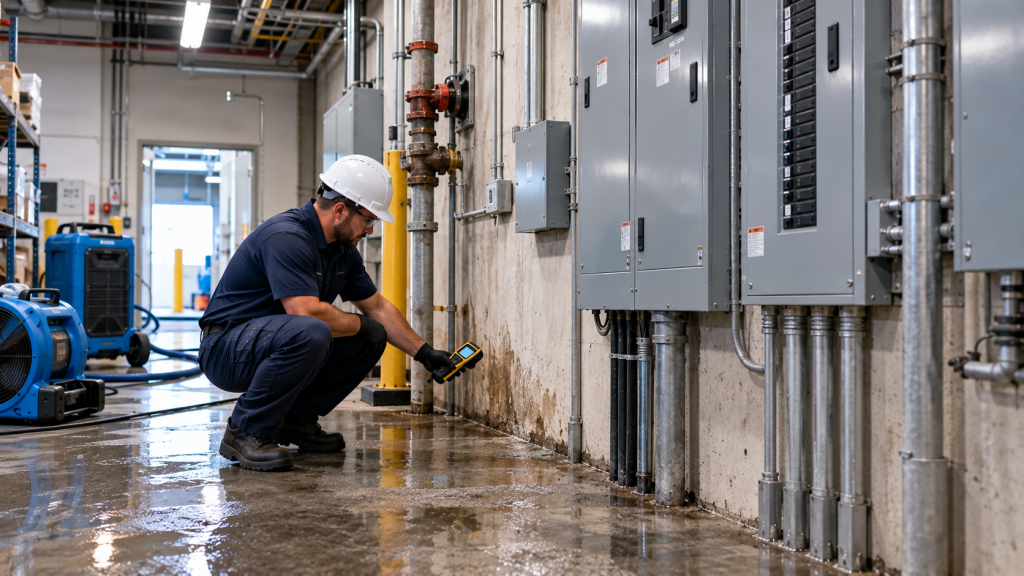
Flooding can affect the mechanical, electrical and life-safety systems that keep a building operating. Electrical panels, transformers, switchgear, elevators, HVAC equipment, fire alarm panels, sprinkler controls, generators and data or telecommunications rooms are frequently located in basements, ground floors or low areas, where they are exposed to flood risk. Water in these systems can pose serious safety hazards and may require inspection, testing, cleaning or replacement before they are returned to service.
Utilities may be shut down or unsafe. Never restore power to equipment that has been in contact with water without inspection by a qualified electrician, and follow utility instructions for gas and electrical service. Elevators, in particular, generally require inspection by qualified personnel before return to service, and jurisdictions may have rules regarding this. Building authorities may also need to approve reoccupancy after major flood or storm damage.
Building structure can be affected too. Saturated soil can put pressure on foundation and retaining walls, flooded slabs and finishes can shift, and prolonged saturation can undermine flooring and subfloors. Where structural damage is suspected, a structural engineer should evaluate the building before extensive work or reoccupancy.
Insurance Considerations for Storm and Flood Losses
Insurance is one of the most misunderstood aspects of flood and storm damage. Standard commercial property policies commonly distinguish between different causes of loss, and it is not unusual for flood, surface water, groundwater, sewer or drain backup, wind, hail and rain to be treated under separate provisions, exclusions or endorsements. Some perils may be covered with sub-limits or higher deductibles, and some may require separate policies, such as those available through the National Flood Insurance Program or private flood insurers.
The actual answer depends on your policy language, the cause of the loss and the facts of what happened, so this page cannot tell you whether a specific loss is covered. What it can do is encourage a few practical steps. Read your policy, or have your broker summarize it, before a storm season begins. Ask about flood, sewer backup, business interruption, extra expense and ordinance or law coverage. Understand the notice requirements and duties after a loss. Document conditions thoroughly, keep receipts, and take reasonable steps to protect the property from further damage. If a claim becomes complicated or disputed, consult a qualified professional, such as a public adjuster or attorney, according to your needs and local rules.
Preparing for Regional Events
Because storm and flood events affect many buildings at once, preparation before the event tends to matter more than it does for a typical plumbing loss. Establish relationships with restoration providers, roofers and other trades in advance, and confirm how they prioritize customers and what information they need from you. Keep an emergency contact list and a copy of your insurance policies, building plans and shutoff locations in a place that can be accessed even if the building cannot.
Physical preparation can reduce damage. Keep roof drains, scuppers, gutters and downspouts clear, inspect roofing and flashings before the storm season, and maintain sealants around windows, doors and penetrations. Evaluate site grading and drainage, and consider backflow prevention on drain lines where appropriate. Where equipment and stored materials are located in flood-prone areas, consider moving critical items higher, using pallets or shelving, and keeping inventory off floors. For known forecasts, sandbags, temporary barriers and shutting down nonessential systems may be appropriate, guided by local emergency instructions.
Business continuity planning is part of preparation. Identify critical operations, backup locations, data protection measures and communication procedures for staff, tenants and customers. Property managers with several buildings can benefit from a portfolio-level plan that prioritizes properties by risk and function, and a simple system for tracking the status of each site during a widespread event.
After the Water Recedes
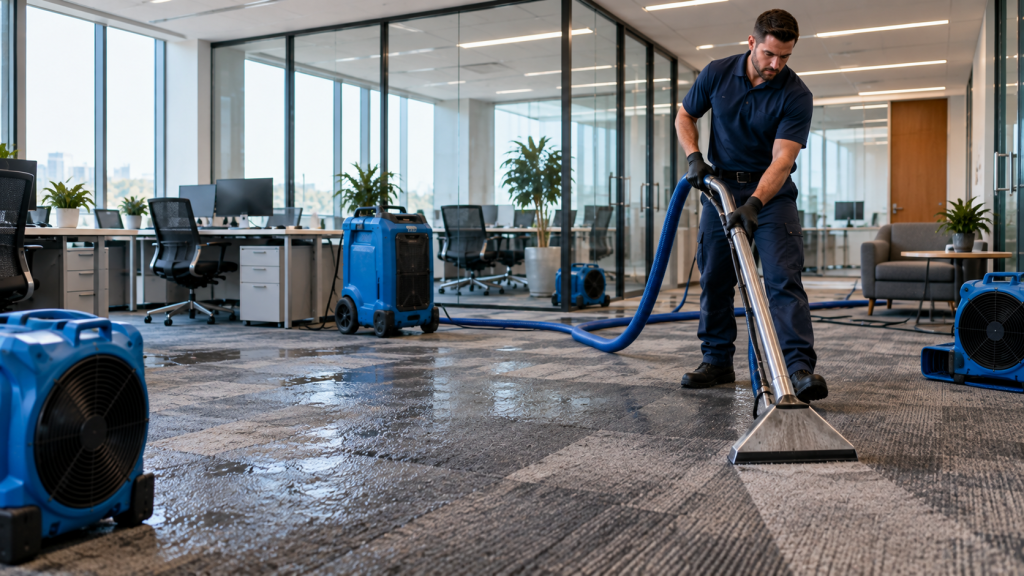
Once conditions are safe for return, the work of recovery begins with a careful assessment. Photographs, notes and moisture readings document the extent of the loss. Structural, electrical, mechanical and life-safety systems are inspected as needed. Standing water is removed, contaminated materials are handled according to the category of water involved, and affected areas are cleaned and dried under controlled conditions. Restoration and repair follow once drying is verified.
Timeliness is important, but so is caution. Flood-damaged buildings can contain hidden hazards, including weakened floors, damaged utilities, contaminated residues and materials that may contain regulated substances. Do not allow occupants to return until a qualified professional has assessed the areas, and follow local authority guidance where a building has been evacuated or posted. Communicate clearly with tenants, staff and customers about timing and access, and document that communication.
Expect the recovery period after a regional event to be longer than after an isolated loss. Contractors may be busy, supply chains may be strained and permit offices may be overloaded. Early planning, clear documentation and realistic expectations help owners work through this period. The recovery planning guide explains the phases of recovery and how to coordinate the parties involved.
Flood and Storm Risks by Property Type
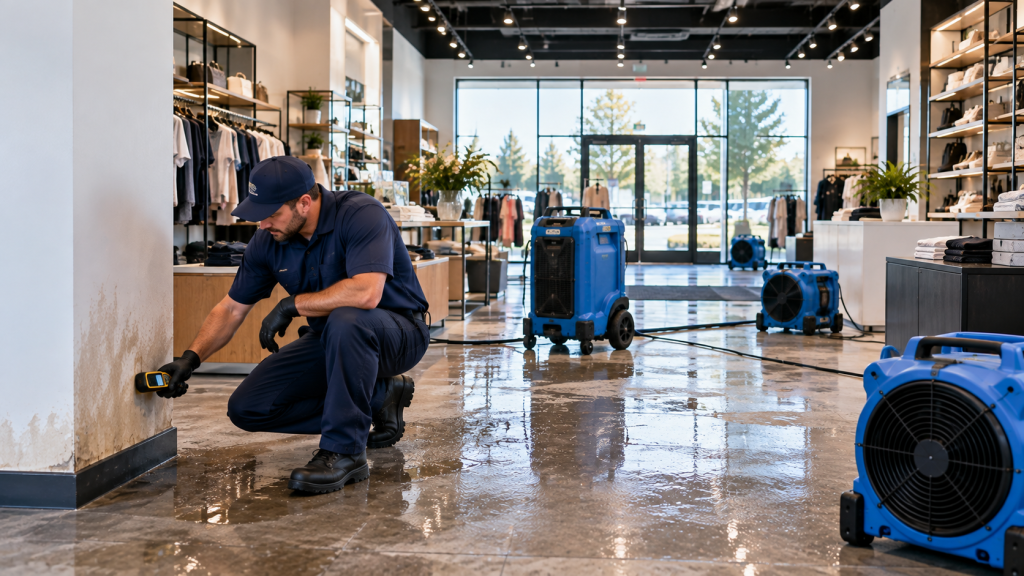
Different properties face different priorities in a storm or flood. Warehouses and distribution centers may have inventory on the floor, loading docks at grade and large roof areas with limited drains. Restaurants and food service operations face food safety and health department requirements after sewer backups or flooding. Hotels and multifamily buildings must consider the safety and relocation of guests and residents. Medical facilities have life-safety and infection-control concerns and often need to protect critical equipment and records. Schools and campuses have large populations and reopening requirements. Retail centers and offices face business interruption, tenant disruption and, in older buildings, aging roofs and drainage.
Each of these properties benefits from recovery plans tuned to its operations. The guide to water damage by property type discusses these differences in greater detail, and the emergency response guide provides the general framework that applies to any building.
Continue: Property Types
How priorities differ for offices, retail, warehouses, hotels, medical sites and more. Read the guide
Continue: Assessment
How moisture is measured and hidden damage is found. Read the guide
Continue: Recovery Planning
Phases, documentation and provider evaluation. Read the guide
Frequently Asked Questions
Water damage is a broad term for harm caused by unwanted water from any source. Flood damage usually refers to water that rises from outside, such as overflowing rivers, coastal surge or heavy runoff, and is often contaminated. Insurance policies often define flood specifically and treat it differently from other water losses.
Not necessarily. Rainwater that has passed through roofing, insulation and building materials can pick up contaminants and is often treated with caution. The category assigned depends on the circumstances and should be determined by a qualified professional.
Coverage varies widely. Sewer or drain backup is often excluded from standard policies unless an endorsement has been added, and limits may apply. Review your policy and consult your insurance professional.
Porous materials that have been in contact with contaminated water, such as carpet, padding, insulation and drywall, are commonly removed rather than dried in place. The right decision depends on the water category, the material and the circumstances.
Not until it is safe. Structural, electrical, mechanical and life-safety systems may need inspection, contaminated areas need cleaning, and some jurisdictions or industries require approval before reoccupancy. Follow guidance from qualified professionals and local authorities.
Common steps include reviewing insurance, maintaining roofs and drainage, elevating critical equipment and inventory, planning shutoff and shutdown procedures, establishing relationships with restoration providers and creating a business continuity plan. Local flood maps and authorities can help identify exposure.
Dealing With a Storm or Flood Loss?
Use the assistance page to organize what happened, how the water entered and which areas are affected, so you can share clear information with your insurer and recovery team.