By building use
Commercial Water Damage by Property Type
Commercial building water damage differs by use: offices, retail, restaurants, hotels, warehouses, healthcare, multifamily and schools.
Why Property Type Changes the Response
Water behaves the same way in every building, but what it damages, who is affected and what rules apply depend heavily on how the property is used. A ceiling leak in a warehouse may threaten pallets of inventory and forklift safety. The same leak in a restaurant may raise food safety and health department questions, in a clinic it may raise infection-control concerns, and in an apartment complex it may involve residents and neighboring units. The physical cause may be identical, but the recovery plan is not.
Property type influences the likely sources of water, the speed at which a loss becomes serious, the types of contents at risk, how much of the building can stay in use and what regulations must be considered. It also shapes the business consequences, since a retailer measures lost sales by the hour, a hotel measures lost room nights, a school measures lost instructional days, and a property manager measures tenant relations and lease obligations.
This guide describes how water damage considerations differ across common types of commercial property. It is general information intended to help owners, managers and operators think through priorities, and it is not a substitute for advice from qualified professionals, your insurer or authorities with jurisdiction over your property. For the underlying fundamentals, see the causes and assessment guide and the emergency response guide.
Occupancy
Who is in the building, whether they can stay and how they are protected.
Contents
Inventory, equipment, records and finishes that water can damage.
Regulation
Health, fire, building and licensing rules that may apply during recovery.
Continuity
How much revenue, service or housing is lost while areas are unusable.
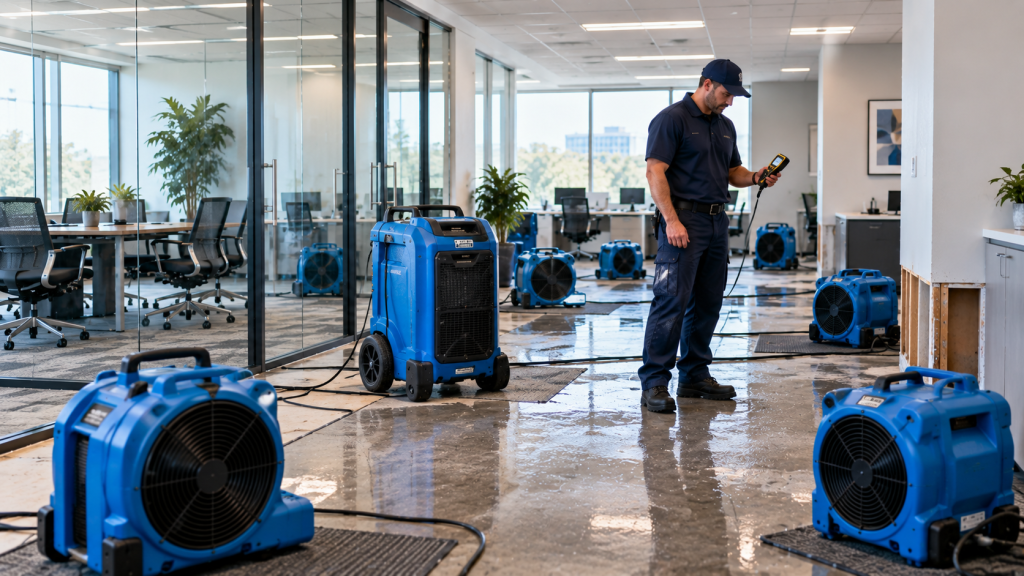
Office Buildings
Office buildings, from small suites to high-rise towers, tend to have extensive plumbing and HVAC systems, suspended ceilings, carpeted floors, drywall partitions and large amounts of electronic equipment and paper records. Water commonly comes from supply lines and restrooms, kitchenettes, HVAC condensate, roof and curtain wall leaks and sprinkler discharge. Because floors are stacked, a leak on an upper floor can travel through slabs and penetrations to several floors below, affecting multiple tenants.
The priorities in an office loss often center on protecting people, data and business operations. Server rooms, network closets and electrical rooms warrant special attention. Ceiling tile, insulation and carpet are often affected, and concealed wall cavities and above-ceiling spaces may hold moisture that is not immediately visible. Multi-tenant buildings raise coordination questions between the landlord, property manager, and each tenant, including responsibility for tenant improvements and contents under the lease. Communication plays a major role, since tenants need to know when they can return and what to do about work and equipment.
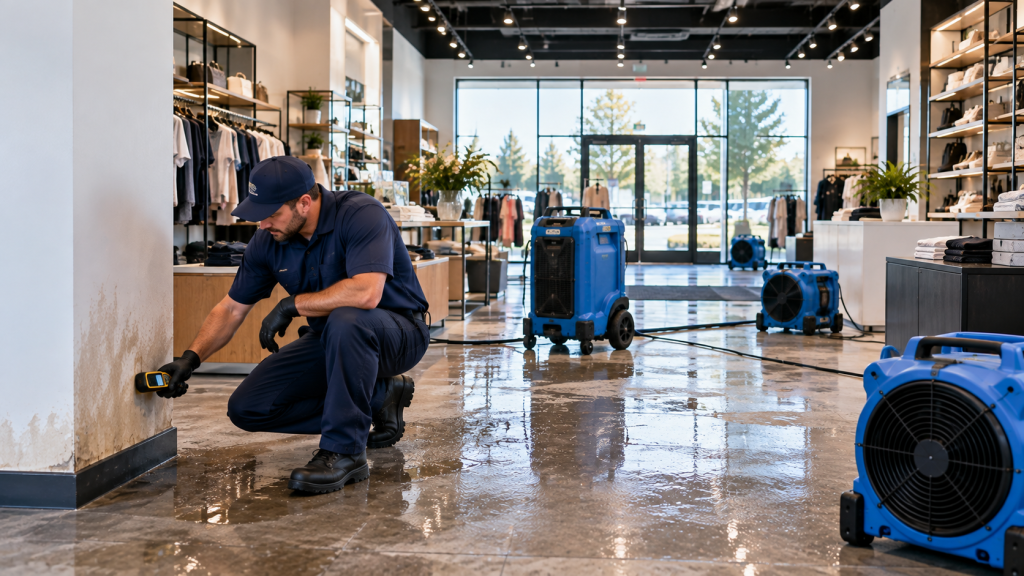
Retail Stores and Shopping Centers
Retail properties include street-front stores, enclosed malls, open-air shopping centers and big-box stores. They share large floor areas, roof structures with many penetrations, storefront glass, display fixtures and inventory that is often stored at floor level. Roof leaks, storefront intrusion during storms, plumbing failures in restrooms and break rooms, and sprinkler discharges are common sources. In shopping centers, water can migrate between adjacent storefronts through shared walls, ceilings and utility chases.
For retailers, time is revenue, and even a small leak can close an aisle or a whole store. Merchandise may be damaged, particularly textiles, paper goods, electronics and food. Documentation of inventory is important, and so are decisions about what can be salvaged, what must be discarded, and what needs to be inspected before sale. Shopping center managers must coordinate the recovery of common areas and multiple tenants while keeping the remaining stores open and safe for customers. Lease provisions about rent abatement, tenant responsibilities and landlord repairs often matter as much as the physical work.
Restaurants and Food Service
Restaurants and commercial kitchens are especially water-intensive. They contain dishwashers, ice machines, grease traps, floor drains, sinks, steam equipment, refrigeration and extensive plumbing. Frequent sources of loss include drain blockages and sewer backups, leaking equipment connections, failed supply lines and roof or exhaust-hood leaks. Grease and food waste in drain lines increase the likelihood of backups, and floors are often designed to shed water to drains that can be overwhelmed.
Food safety is a central concern. Water contact with food, food-contact surfaces or preparation areas can trigger health department requirements, and a sewer backup or contaminated water event may require closure until the space is cleaned and inspected. Inspection and permit rules vary by state and locality, so operators should contact the appropriate health authority early. Cleaning and sanitizing must be done with appropriate methods, and equipment such as refrigeration, cooking lines and ventilation systems may need evaluation. Because restaurants often operate on tight margins with perishable inventory, documentation of discarded food and lost business is important.
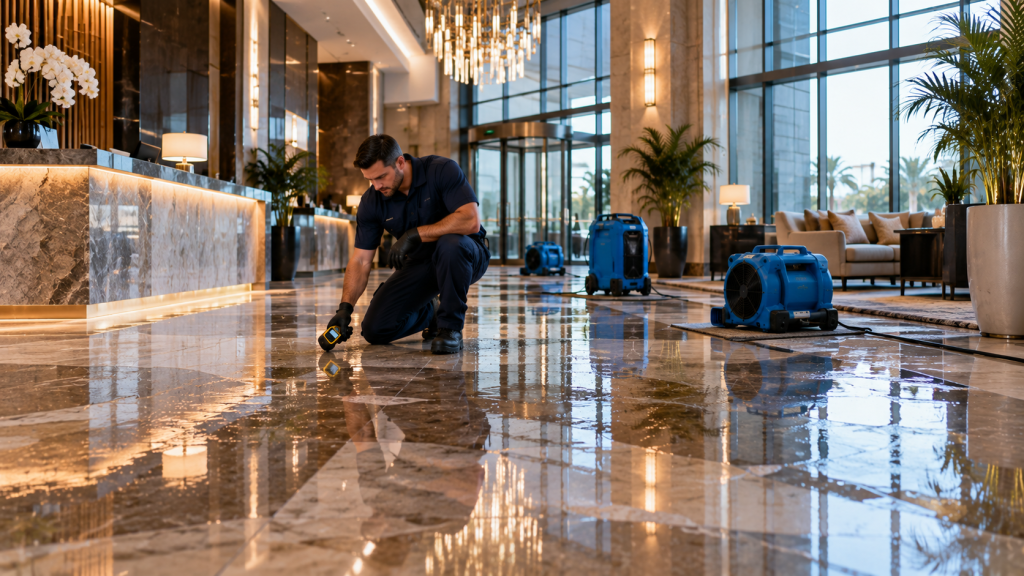
Hotels and Hospitality
Hotels combine the complexity of a commercial building with the expectations of a residential experience. They contain many guest rooms with individual plumbing and HVAC, laundry, kitchens, pools, spas, mechanical rooms and public spaces. A supply line failure in one room can affect rooms above, below and beside it, and vertical chases can carry water across many floors. Sprinkler discharge in corridors can affect several rooms at once, and a roof or envelope leak can impact upper floors and public areas.
The operating challenge is guest safety and revenue. Rooms taken out of inventory reduce income immediately, and guests may need to be relocated. Recovery planning often involves room-by-room prioritization, control of noise and odors near occupied rooms, and clear communication with guests and staff. Brand standards, life safety systems and local code requirements may affect what work is required before rooms return to service. Contents such as furniture, fixtures and equipment, along with soft goods like carpet and bedding, often need to be evaluated, and the volume of items can be large. Occupancy patterns also matter, since scheduled events, seasonal peaks and group bookings increase the cost of downtime.
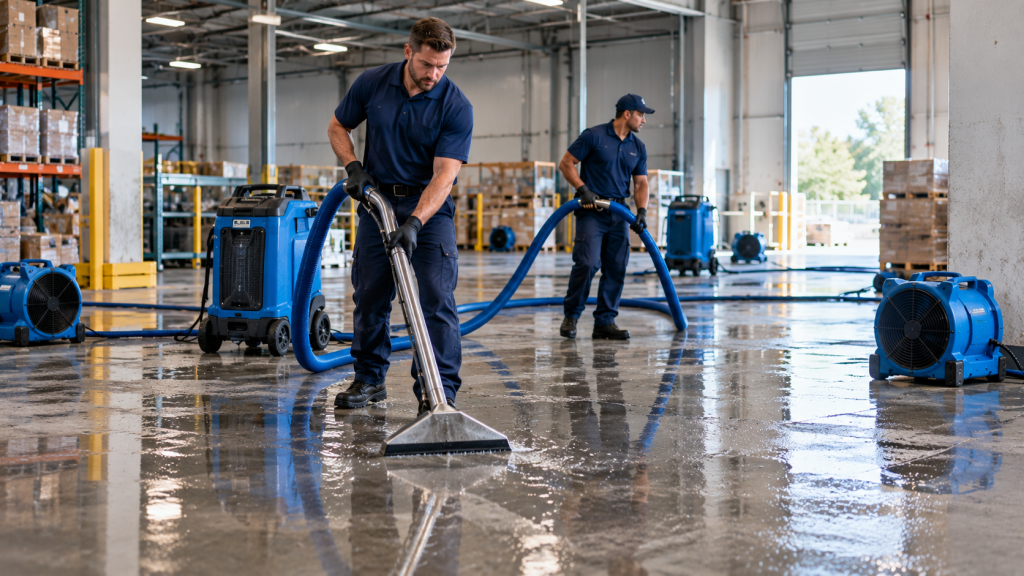
Warehouses and Distribution Centers
Warehouses and distribution centers have large roof areas, tall ceilings, long spans, loading docks and inventory stored on racking or directly on the floor. Roof leaks, drain failures, sprinkler discharge, dock door and slab-level intrusion during storms and, in some facilities, freeze-related failures are among the common sources. Because these buildings are large and often lightly staffed, leaks can run undetected for some time, particularly overnight and on weekends.
The risk to inventory is often the dominant issue. Water can damage cartons, packaging, paper goods, food, electronics, textiles and raw materials, and sprinkler discharge can soak large volumes of stock quickly. Racking and pallets may need to be inspected and inventory moved to protect it, which requires equipment and safe procedures. Concrete slabs can retain moisture, which may affect stored goods and any floor coatings. Fire protection systems in tall storage occupancies are complex, and any impairment of them has to be managed carefully under applicable codes and the requirements of your insurer. Third-party logistics operators must also consider customer contracts, since damaged goods may belong to others and notification obligations may apply.
Industrial and Manufacturing Facilities
Industrial buildings vary widely, but many combine large roof areas, heavy equipment, process piping, cooling systems and electrical distribution. Water intrusion can affect production lines, control systems, precision machinery, clean areas and stored materials. Process water, coolant, and chemical-containing wastewater can complicate a response, and floors may be treated or sealed in ways that affect drying.
Safety planning is more involved in industrial settings. Lockout and tagout procedures, hazardous materials, confined spaces, energized equipment and specialized environmental requirements may all apply. Equipment vendors may need to evaluate machinery before it is restarted, and some equipment requires specific procedures to dry or recondition it. Production downtime can be very expensive, so recovery planning often focuses on identifying critical processes, phasing repairs and considering temporary measures that allow limited operation to continue where it is safe. Regulatory requirements related to wastewater, spills and environmental compliance may also come into play depending on what the water has contacted.
Medical Offices, Clinics and Healthcare Facilities
Healthcare facilities, from small clinics to hospitals and long-term care facilities, have strict requirements for cleanliness, infection prevention and continuity of care. Water damage in these settings can affect patient areas, sterile processing, laboratories, imaging suites, pharmacies, medical gas systems, and records. Sources include plumbing failures, sterilization and dialysis equipment connections, HVAC condensate, roof leaks and sprinkler discharge.
Infection control is a key consideration. Moisture and disturbed building materials can create conditions that affect air quality and increase risk to vulnerable patients, so facilities commonly follow infection control risk assessment procedures and use containment and negative air measures during work. Regulatory and accreditation requirements, as well as licensing rules, differ by state and facility type, and they can influence when and how areas are returned to service. Coordination with infection preventionists, facilities engineers and clinical leaders should begin early. Sensitive equipment, medications and patient records need protection and, where necessary, professional evaluation before use.
Multifamily and Mixed-Use Properties
Apartment buildings, condominiums and mixed-use properties combine residential and commercial elements, with shared plumbing risers, roofs, sprinkler systems and mechanical systems serving many units and businesses. A failure in one unit or space can affect neighbors above and below, and water in a shared wall or chase can travel far from the origin. Ground-floor retail or restaurants in a mixed-use building introduce additional water sources, such as grease lines and heavy equipment, that residential units above may not expect.
Responsibility and communication are the main challenges. Owners, associations, residents, commercial tenants, insurers and contractors all have roles, and lease or governing documents may define who is responsible for repair of different components. Residents may need temporary relocation, and rules about notice, access and habitability may apply under state and local law. Timely communication, clear scheduling and consistent documentation reduce disputes. Because building systems are shared, isolating a leak may require shutting off water to multiple units, and this affects people who did nothing to cause the problem.
Schools, Universities and Commercial Campuses
Educational facilities and multi-building campuses have large populations, extensive plumbing, athletic and laboratory areas, aging infrastructure in some cases and seasonal occupancy patterns. Summer or holiday closures can hide leaks for a long time, and the return of students and staff can expose problems that developed during the vacancy. Roof systems, restrooms, kitchens, boiler and chiller systems and sprinkler lines are common sources.
Reopening schedules are a major priority. Schools may need to complete cleaning, drying and repairs before students return, and safety and indoor air quality concerns are especially important where children are present. Public institutions may have procurement and reporting requirements that affect how contractors are selected and how work is documented. Commercial campuses, such as corporate parks and medical complexes, add scale: multiple buildings may be served by shared utilities, and a single failure can impact several structures. Central coordination, clear building-level priorities and consistent documentation are essential.
Property Management Portfolios
Owners and managers with many buildings face a different challenge: they need a process that works consistently across locations. A portfolio may include several property types, different ages and construction methods, varying insurance arrangements and multiple local contractors. When a widespread event occurs, or when losses happen at several sites at once, resources and attention are spread thin.
Standardization helps. Portfolio managers benefit from a common response plan, a shared contact and vendor list for each region, consistent documentation templates and clear escalation rules that define who decides what. A record of each property’s shutoff locations, roof and plumbing condition, insurance details and critical tenants allows faster decisions in an emergency. Trend tracking is valuable too: repeated losses from the same cause, such as aging roofs or corroded supply lines, may justify capital planning and proactive maintenance. National and regional programs with pre-qualified restoration providers can reduce delays, though they should still be reviewed for qualifications, capacity and pricing transparency.
Comparing Water Damage Priorities Across Property Types
The following summary highlights how the most pressing considerations differ, though every situation is unique and any building can face any combination of issues.
- Offices: protecting data, electrical rooms, multi-floor migration and tenant coordination.
- Retail: inventory, storefront intrusion, customer safety and rapid reopening.
- Restaurants: food safety, sewer and grease lines, health department requirements and refrigeration.
- Hotels: guest relocation, room-by-room recovery, vertical chases and brand standards.
- Warehouses: roof and dock intrusion, inventory protection, racking safety and fire protection systems.
- Industrial: equipment, process safety, environmental rules and production downtime.
- Healthcare: infection control, patient care continuity, regulated requirements and sensitive equipment.
- Multifamily and mixed-use: residents, shared systems, mixed occupancies and communication.
- Schools and campuses: reopening schedules, air quality, seasonal vacancies and multi-building coordination.
- Portfolios: consistency, vendor coverage, trend tracking and scalable procedures.
Using This Information in Your Planning
A practical way to apply this guide is to walk through your own property and ask a few questions. What are the most likely sources of water? What contents or equipment would be hardest to replace? Which areas must remain in operation, and which can close temporarily? Who has to be notified, including tenants, regulators, customers and insurers? What documentation would you need to demonstrate the extent of a loss? Answering these questions before an incident allows you to prepare more realistic response plans and to have better conversations with insurers and providers.
Also remember that property-specific rules vary widely. Health, fire, building, environmental and licensing requirements differ by jurisdiction and change over time, so confirm current requirements with the relevant authorities. When evaluating restoration providers, ask about experience with your property type, how they handle occupied buildings and sensitive areas, and how they document their work. The recovery planning guide offers a framework for these conversations.
Continue: Flood and Storm
Storm intrusion, flooding and sewer events by water category. Read the guide
Continue: Emergency Response
The first 24 to 72 hours after a loss. Read the guide
Continue: Recovery Planning
Phases, documentation and evaluating providers. Read the guide
Frequently Asked Questions
Yes. The physical process of removing water and drying materials is similar, but priorities such as occupancy, contents, regulatory requirements, infection control, food safety and business continuity vary by property type and shape the scope and sequence of the work.
Risk depends on the building’s age, condition, maintenance, systems and location more than on type alone. However, properties with heavy water use, large roofs, extensive plumbing or unattended periods, such as restaurants, hotels, warehouses and multifamily buildings, often face distinct exposures.
Not automatically. If water has contacted food areas or if a sewer backup or contamination has occurred, health authorities may need to approve reopening. Requirements vary by jurisdiction, so contact your local health department early.
They typically use infection control risk assessment, containment, and coordination with facilities and clinical leaders, and they follow applicable regulatory and accreditation requirements. Timelines for returning areas to service depend on those requirements as well as on drying and cleaning results.
Standardize response plans, contact lists and documentation, keep records of each building’s critical systems and insurance details, and track recurring problems so they can be addressed through maintenance or capital planning.
It depends on the cause, the lease terms, the governing documents and local law. Landlords are often responsible for building systems and common elements, and tenants for their contents and improvements, but details vary, so consult the lease and legal counsel where needed.
Planning for Your Property Type?
Use the assistance page to outline your property type, occupancy and priorities so that your questions and information are organized when you speak with insurers and providers.