Contact and request preparation
Request Commercial Water Damage Assistance
Commercial water damage assistance starts with clear facts: gather property, source and urgency details before contacting providers.
Before You Contact Anyone
If people are in danger, call 911 first. Fire, electrical hazards, structural concerns, gas odors, injuries or people trapped in flooded areas are emergencies for public safety responders, and property protection comes second to human safety.
If the situation is safe, the most useful thing you can do is collect the basic facts. Restoration providers, insurers and building professionals all ask similar questions, and having answers ready speeds up every conversation and helps produce a more accurate plan. This page explains what information to gather, how to describe the urgency of your situation and how to send your request.
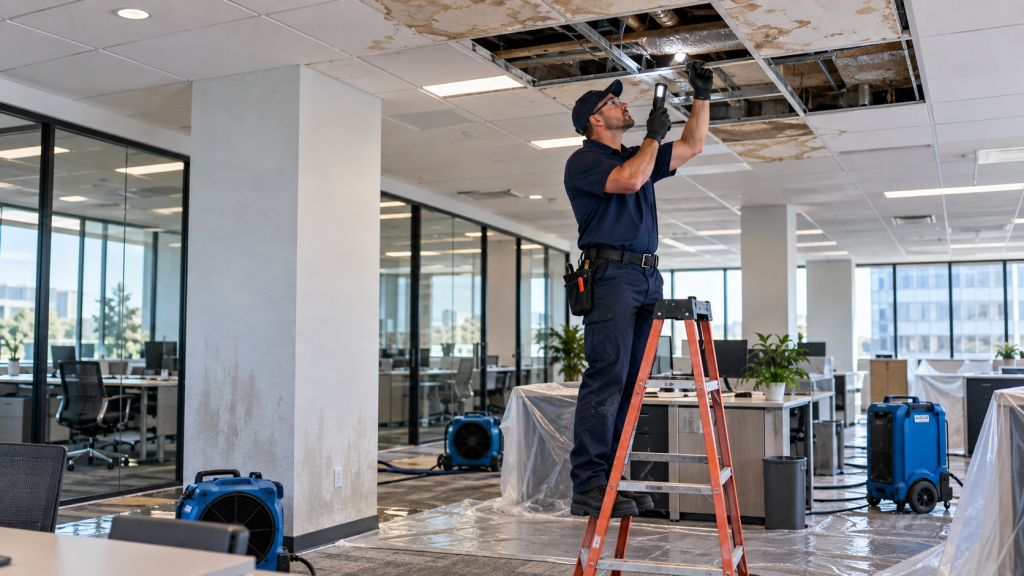
A note on what this site is. This website is an educational resource about commercial water damage. It publishes general information and does not itself perform restoration work, and it does not replace your insurer, your building engineer, licensed contractors or legal counsel. If you need on-site help right now, contact a qualified local restoration provider in addition to sending a request here.
Information to Gather
The following details help others understand your situation quickly. You do not need every item to get started, and it is better to share what you know than to wait for perfect information.
- Property details: the type of property, the number of floors, the approximate size, the age of the building and the city and state.
- Your role: owner, property manager, tenant, facility manager, risk manager or other.
- Source of water: the known or suspected cause, such as a pipe failure, roof leak, sprinkler discharge, HVAC condensate, storm, flooding or sewer backup.
- Timeline: when the water was discovered, when the source was stopped and whether it is still active.
- Affected areas: rooms, floors, tenant spaces and any systems, equipment or inventory involved.
- Water type: whether the water appears clean, cloudy or dirty, and whether sewage or floodwater may be involved.
- Hazards: any electrical concerns, sagging ceilings, structural damage, chemicals or health-related concerns.
- Occupancy: whether the building is occupied and whether operations must continue.
- Insurance status: whether you have notified your insurer, and any claim or reference number you have received.
- Documentation: whether photographs, video and notes have been taken.
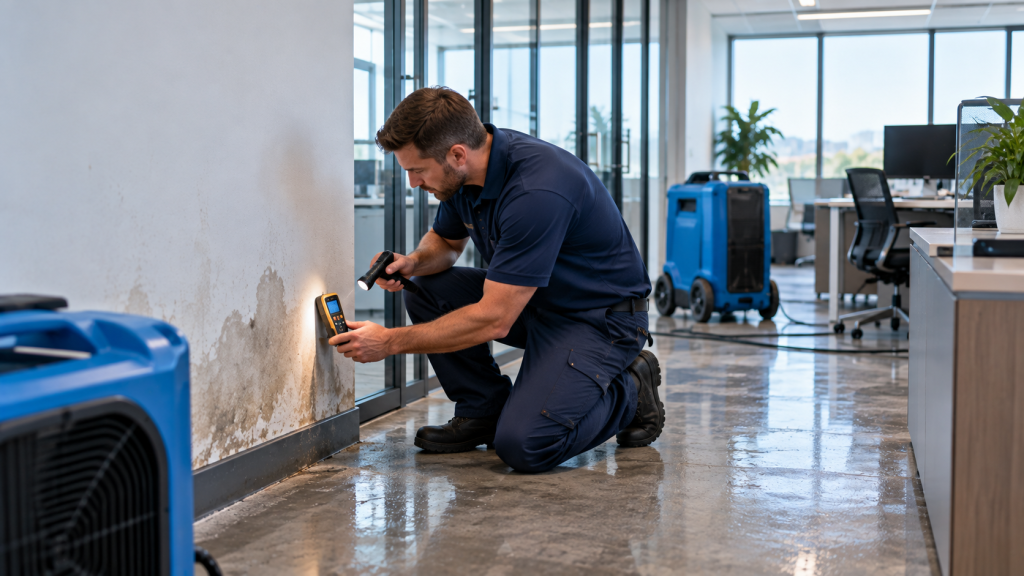
Describing the Urgency
Being clear about urgency helps everyone respond appropriately. Consider which of the following best describes your situation, and state it plainly when you make contact.
Emergency
Water is actively flowing or spreading, there are safety hazards, or critical operations are threatened. Call 911 for immediate danger and contact a local restoration provider right away.
Urgent
The source is stopped, but water is present and materials are wet. Prompt professional assessment and drying help limit further damage.
Planning
No active loss, but you want to prepare a response plan, evaluate risk or understand recovery options before an incident occurs.
Who to Contact First
In most commercial situations, the order of contact is: emergency services for immediate danger, your building engineer or property manager, your insurance representative and a qualified restoration provider. Specialty trades such as plumbers, electricians and roofers may be needed to correct the cause. Tenants and staff should also be informed about access and safety.
For a step-by-step explanation, read the emergency commercial water damage response guide. If you are trying to understand how the water got in, the causes and assessment guide is a good place to start, and if the event is weather-related, see the flood and storm guide. For planning the weeks after a loss, use the recovery planning guide.
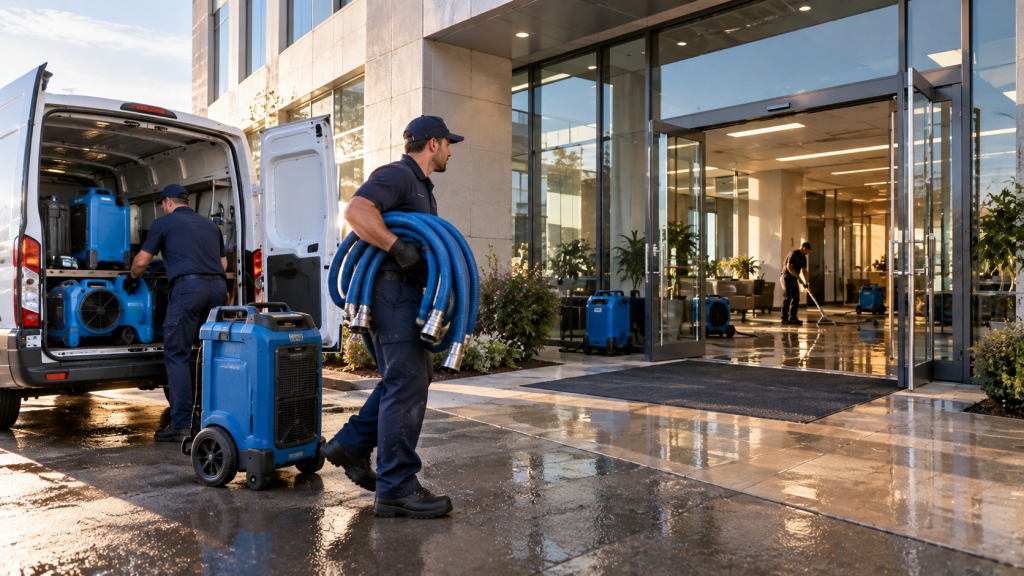
How to Send Your Request
To send your request, email info@commercialwaterdamage.us with the subject line “Commercial water damage request” and include the information listed above in plain text. Photographs can be attached if the files are not too large. Please do not include payment card numbers, bank details, passwords or other sensitive personal information in your message.
We use the information you send only to respond to your request. Email is not a secure channel, so if your situation involves confidential information, share only what is needed and use secure methods for sensitive documents. Because this is an informational website, replies provide general guidance and direction to resources, and are not legal, insurance or engineering advice.

Frequently Asked Questions
No. This website provides educational information and a way to organize your request. For an emergency, call 911 if there is danger, and contact a qualified local restoration provider for on-site help.
The property type and location, the source and timing of the water, the affected areas, any hazards, whether the building is occupied and whether you have contacted your insurer. Photographs and notes are very useful.
Report the loss promptly, and follow your policy’s notice requirements. Your insurer can explain coverage and any requirements for documentation and mitigation. Your restoration provider can typically begin protective work in parallel.
This site does not endorse specific companies. The recovery planning guide explains how to evaluate providers on certifications, licensing, insurance, capacity, experience and documentation practices.
Not Sure Where to Start?
Read the emergency response guide for a practical checklist covering safety, documentation, key contacts and what to avoid in the first 24 to 72 hours.